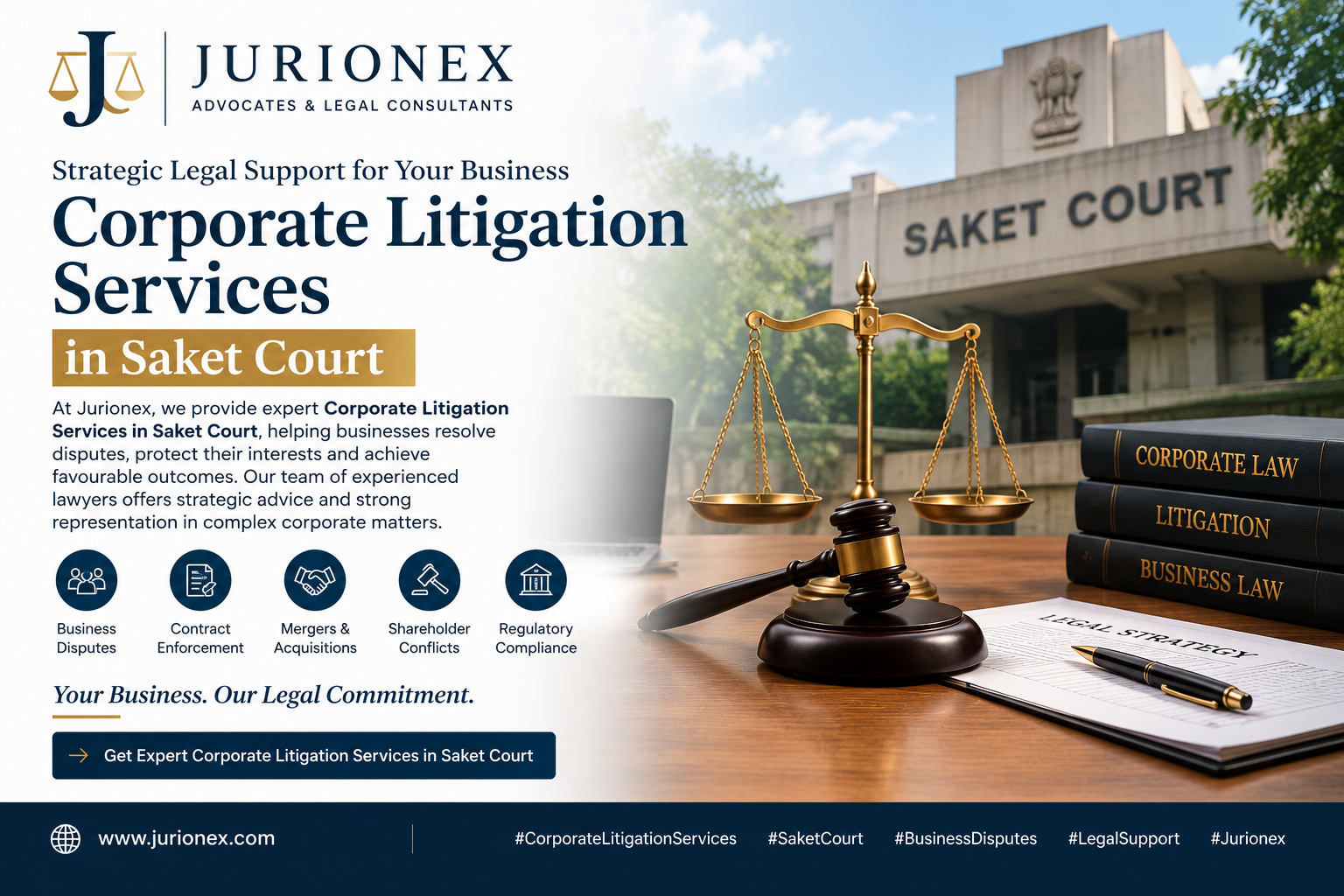
Corporate disputes can affect contracts, investments, partnerships, shareholders, directors and the day-to-day operations of a business. When a commercial disagreement develops into a legal dispute, businesses need to understand their contractual rights, applicable law, evidence and the appropriate legal forum.
Corporate Litigation Services in Saket Court may be relevant to businesses and individuals dealing with corporate and commercial disputes that fall within the jurisdiction and scope of the court. The appropriate legal strategy depends on the nature of the dispute, documents available, contractual terms and applicable law.
For information about corporate and commercial legal services, visit Jurionex.
Key Takeaways
- Corporate litigation can involve contractual, shareholder, partnership, investment and commercial disputes.
- Reviewing contracts and corporate documents is an important first step in assessing a dispute.
- The appropriate court or dispute-resolution mechanism depends on jurisdiction, applicable law and the facts.
- Businesses should preserve relevant documents and evidence when a dispute arises.
- Negotiation, mediation or arbitration may sometimes provide alternatives to litigation.
- Court proceedings require careful preparation of pleadings, evidence and legal arguments.
- Every corporate dispute should be assessed individually rather than relying on a standard litigation strategy.
What Is Corporate Litigation?
Corporate litigation refers to legal proceedings arising from disputes involving businesses, companies, directors, shareholders, commercial contracts and related corporate relationships.
Corporate disputes may arise from:
- Breach of commercial contracts
- Shareholder disagreements
- Director-related disputes
- Partnership disagreements
- Investment disputes
- Payment and recovery issues
- Business acquisition disputes
- Joint venture disagreements
- Intellectual property disputes
- Confidentiality and business information issues
- Corporate governance disputes
The legal issues involved depend on the underlying transaction, corporate structure and documents.
Corporate Litigation Services in Saket Court
Businesses may require legal assistance when a commercial dispute develops into formal proceedings.
Corporate litigation services may involve:
- Case assessment
- Contract and document review
- Legal notices
- Drafting pleadings
- Filing appropriate proceedings
- Interim relief applications
- Evidence preparation
- Representation in court
- Settlement negotiations
- Mediation support
- Appeals or further proceedings where applicable
The precise service required depends on the nature and stage of the dispute.
Common Corporate Disputes
Contractual Disputes
Commercial contracts establish the rights and obligations of businesses and their counterparties.
Disputes may arise concerning:
- Non-payment
- Delayed performance
- Quality of services
- Breach of contractual obligations
- Termination
- Indemnity
- Liability
- Confidentiality
- Dispute-resolution clauses
Before initiating proceedings, the contract should be carefully reviewed to understand the obligations and available remedies.
Shareholder Disputes
Disagreements between shareholders can concern ownership, voting rights, management decisions, transfer of shares or other corporate matters.
Relevant documents may include:
- Articles of Association
- Shareholder agreements
- Board resolutions
- Share certificates and corporate records
- Investment agreements
- Correspondence between parties
The appropriate legal remedy depends on the facts and applicable corporate law.
Director and Management Disputes
Corporate disputes can sometimes involve directors or senior management.
Issues may include:
- Management authority
- Board decisions
- Corporate governance
- Alleged breaches of duties
- Conflict of interest
- Corporate records
- Shareholder-director disagreements
Such matters may require examination of corporate documents and the company’s governance structure.
Partnership and Joint Venture Disputes
Businesses working through partnerships or joint ventures can encounter disagreements regarding:
- Contributions
- Profit sharing
- Management
- Decision-making
- Intellectual property
- Business assets
- Exit arrangements
- Contractual obligations
The governing agreement is often an important starting point when evaluating such disputes.
Importance of Corporate Documents
Corporate litigation is heavily dependent on documents and evidence.
Depending on the dispute, relevant records may include:
- Contracts
- Invoices
- Emails
- Notices
- Board resolutions
- Shareholder agreements
- Financial records
- Corporate filings
- Meeting minutes
- Purchase orders
- Business correspondence
- Previous legal notices
- Court orders
Businesses should preserve potentially relevant records rather than deleting or altering documents after a dispute develops.
Legal Notice Before Litigation
A legal notice may be appropriate in some commercial disputes before formal proceedings are initiated.
A notice may set out:
- Background of the dispute
- Contractual obligations
- Alleged breach
- Relevant facts
- Demand or proposed resolution
- Time for response
- Potential legal action
Whether a notice is required or strategically useful depends on the contract, applicable law and circumstances.
Choosing Between Litigation and Settlement
Not every corporate dispute necessarily needs to proceed through a full trial.
Depending on the circumstances, businesses may consider:
Negotiation
Parties may communicate directly or through their lawyers to explore a commercial settlement.
Mediation
A neutral third party may assist the parties in exploring a mutually acceptable resolution.
Arbitration
Where an enforceable arbitration agreement exists and the dispute falls within its scope, arbitration may be available subject to applicable law.
Litigation
Court proceedings may be appropriate where the dispute requires judicial determination or where other dispute-resolution options are unsuitable or unsuccessful.
The appropriate approach should be determined after reviewing the relevant contract and facts.
Corporate Litigation and Commercial Contracts
A dispute-resolution clause can significantly affect how a dispute should be handled.
Contracts may contain provisions relating to:
- Jurisdiction
- Arbitration
- Mediation
- Governing law
- Notice requirements
- Limitation of liability
- Termination
- Payment disputes
A lawyer should review these provisions before recommending a particular course of action.
Interim Relief in Corporate Disputes
In some cases, a party may require temporary or interim protection while the dispute is pending.
Depending on the circumstances, interim relief may concern:
- Preservation of property
- Protection of contractual or commercial interests
- Prevention of certain actions
- Preservation of evidence
- Other forms of relief available under applicable law
The availability of interim relief depends on the facts, legal provisions and requirements applicable to the proceeding.
Corporate Litigation for Businesses and Startups
Startups and established businesses may face different types of disputes.
Startups
Legal issues may involve:
- Founder disagreements
- Investor disputes
- Shareholding
- Intellectual property
- Commercial contracts
- Vendor relationships
- Employment arrangements
Established Businesses
Larger businesses may encounter:
- Complex contractual disputes
- Shareholder litigation
- Acquisition-related disputes
- Joint venture disagreements
- Regulatory issues
- Commercial recovery claims
- Intellectual property disputes
The litigation strategy should reflect the size, structure and commercial objectives of the business.
How a Corporate Litigation Lawyer Can Help
A lawyer handling a corporate dispute may assist by:
- Reviewing the facts.
- Examining relevant agreements and documents.
- Identifying potential legal issues.
- Assessing jurisdiction and available remedies.
- Advising on negotiation or litigation options.
- Preparing legal notices where appropriate.
- Drafting pleadings and applications.
- Preparing supporting evidence.
- Representing the client during proceedings.
- Advising on settlement opportunities and subsequent legal steps.
The exact scope depends on the matter and stage of proceedings.
Why Early Legal Assessment Matters
Businesses sometimes delay obtaining legal advice until a dispute becomes urgent.
Early assessment can help identify:
- Contractual rights
- Limitation concerns
- Jurisdictional issues
- Evidence requirements
- Notice requirements
- Possible settlement options
- Potential legal remedies
Early advice does not guarantee a particular outcome, but it can help a business make an informed decision about its legal options.
How to Choose Corporate Litigation Services in Saket Court
Businesses considering legal representation should evaluate several factors.
Relevant Experience
Consider whether the lawyer handles disputes similar to the particular corporate issue.
Understanding of Commercial Objectives
Corporate litigation can affect business operations. Legal advice should take the commercial context into account.
Document-Based Approach
A strong case assessment should be based on contracts, correspondence, corporate records and other available evidence.
Clear Communication
The client should understand the potential legal options, risks, costs and procedural stages.
Appropriate Legal Strategy
The strategy should be based on the facts and applicable law rather than assumptions about the outcome.
Frequently Asked Questions
What are Corporate Litigation Services in Saket Court?
Corporate Litigation Services in Saket Court can include legal assistance relating to business and corporate disputes, including contract disputes, shareholder matters, commercial disagreements and other applicable proceedings.
What documents are important in a corporate dispute?
Depending on the case, important documents may include contracts, invoices, emails, notices, corporate records, board resolutions, shareholder agreements and financial records.
Should a business send a legal notice before filing a case?
It depends on the nature of the dispute, applicable law and contractual requirements. A lawyer can assess whether a notice is required or strategically appropriate.
Can a corporate dispute be settled without going to court?
Some disputes can be resolved through negotiation, mediation or arbitration, depending on the circumstances and applicable agreements.
Can a corporate lawyer help with shareholder disputes?
Yes. Depending on the matter, legal assistance may involve reviewing shareholder agreements, corporate records, governance issues and available dispute-resolution mechanisms.
Is Saket Court appropriate for every corporate dispute?
Not necessarily. The appropriate forum depends on jurisdiction, the nature of the dispute, applicable legislation, contractual clauses and other procedural considerations.
Conclusion
Corporate disputes can involve significant commercial and legal consequences. From contractual disagreements and shareholder conflicts to partnership, investment and governance issues, businesses need a structured approach based on the facts and relevant documents.
Corporate Litigation Services in Saket Court can involve case assessment, legal documentation, dispute-resolution advice, court proceedings and related legal assistance where the matter falls within the appropriate jurisdiction.
For more information about corporate and commercial legal services, visit https://jurionex.com/.
Legal Disclaimer: This article is intended for general informational purposes only and does not constitute legal advice. The appropriate legal remedy, forum and procedure depend on the facts and applicable law. Businesses should obtain professional legal advice for their specific circumstances.